
How do porta potties work?
Under the seat sits a holding tank, typically 60 to 70 gallons on a standard unit, built into a base about 44 by 48 inches on the ground. There is no flush, no water line. Waste drops straight into the tank, where a blue chemical treats it and holds down smell until the next pump-out. A vent stack pulls odor up and out through a filter, which is why a well-serviced unit smells more like the chemical than anything else. Most rental companies in Olathe follow a standard pump-and-clean visit once a week, which lines up with the ANSI/PSAI Z4.3 baseline of one service visit per week for up to 10 users over a 40 hour week. High-traffic jobs need more. A crew of forty framers on a subdivision build in Olathe goes through paper and hand sanitizer fast, so a two-visit week keeps units usable instead of overflowing. If you are trying to figure out how many units a site actually needs, the porta potty placement guide and the how many porta potties do I need page both walk through the math by headcount and hours.
How do flushable porta potties work?
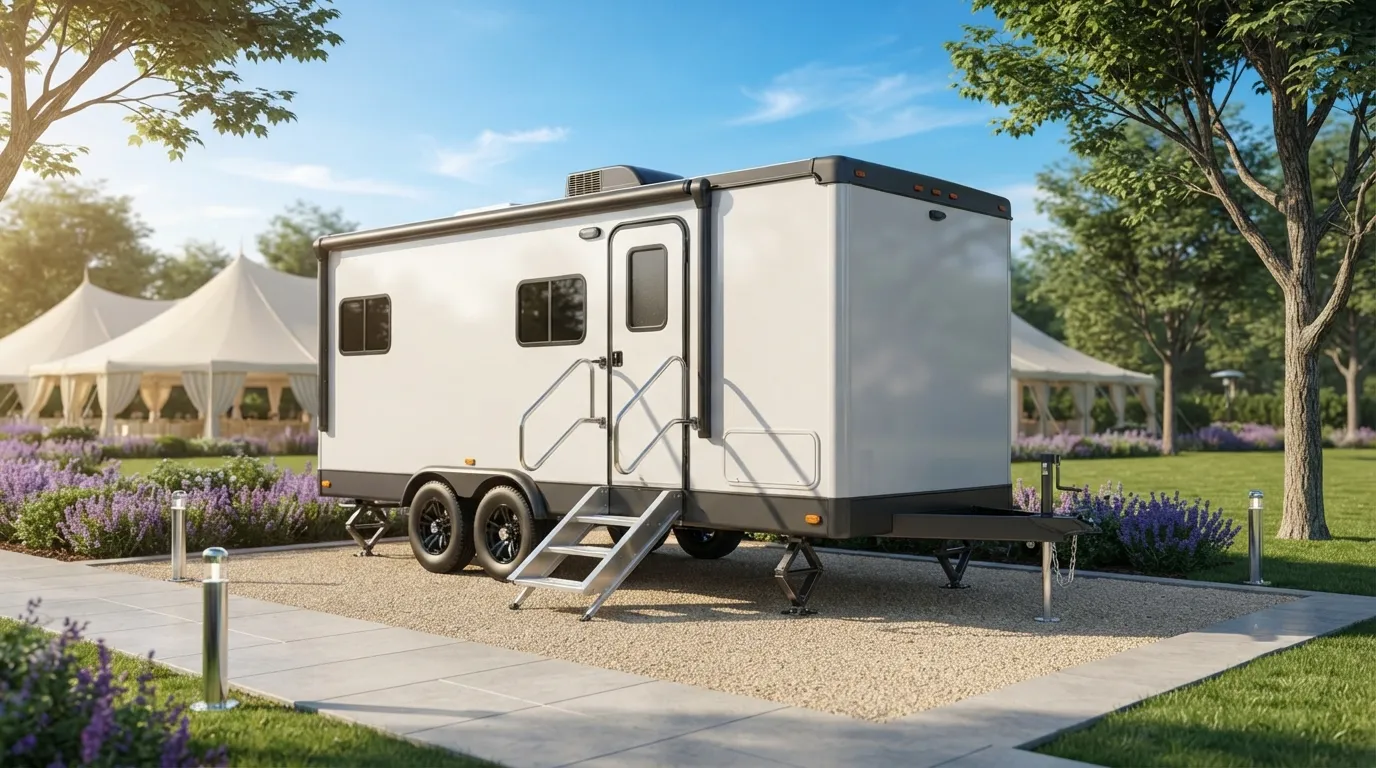
A flushable or deluxe unit adds a small onboard freshwater tank and a foot pump or hand pump that pushes water through the bowl on flush, rinsing waste into the same holding tank below. It still is not connected to a sewer line. Everything stays self-contained, just like a standard porta potty rental, except the flush cuts down on residue and smell between services. Some deluxe flushable porta potty models also include a sink with its own small freshwater reservoir, foot-pump soap dispenser and a separate gray water tank underneath for handwashing runoff. That is different from a full restroom trailer rental, which runs on pressurized water and holds far more capacity, more like a 2 stall restroom trailer or 4 stall restroom trailer built for weddings or corporate events. Flushable units are the middle ground: no plumbing hookup needed, but a noticeably better experience than a basic unit, which is why they show up often at wedding restroom rental and event restroom rental bookings around Olathe.

How does a portable sink work?
A portable sink runs on the same self-contained logic as the toilet: a freshwater tank feeds the faucet, usually by foot pump or hand crank, and a gray water tank underneath catches the runoff so nothing drains onto the ground. No hose bib required, no sewer tie-in. That matters for compliance. Under 29 CFR 1910.141(d)(2), washing facilities need soap and towels or a hand-drying device, and hand sanitizer alone does not satisfy that. A standalone handwashing station rental or portable sink rental covers that requirement on its own, separate from the toilets. On sites where crews apply paints, coatings, herbicides or insecticides, OSHA 1926.51(f)(1) specifically requires washing facilities for that contaminant exposure, which is different from general sanitation coverage. A hand sanitizer station rental is a fine supplement but does not replace a sink where the standard calls for actual washing. The handwashing requirements page breaks down which jobs in Olathe need which setup.
Why does a septic tank need chemical cleaning?
A residential septic tank is not the same system as a porta potty, but the two get confused often. A septic tank is typically pumped every 3 to 5 years depending on tank size and household size, and it is a fixed underground tank connected to your home's plumbing, not a portable unit. Enzyme or bacterial additives sold as septic tank cleaning chemicals are meant to help break down solids between pumpings, but they do not replace the pump-out itself. A grease interceptor works on a different rule entirely: it gets pumped once fats, oils, grease and solids reach 25 percent of the liquid depth, which commercial kitchens in Olathe need to track closely. If your tank is backing up, gurgling, or the yard is soggy over the drain field, that is worth checking against the septic tank warning signs page before you guess at a chemical fix. Actual pumping goes through septic pumping service or septic tank cleaning, and restaurants should look at grease trap pumping instead of a generic additive.
Unit types at a glance
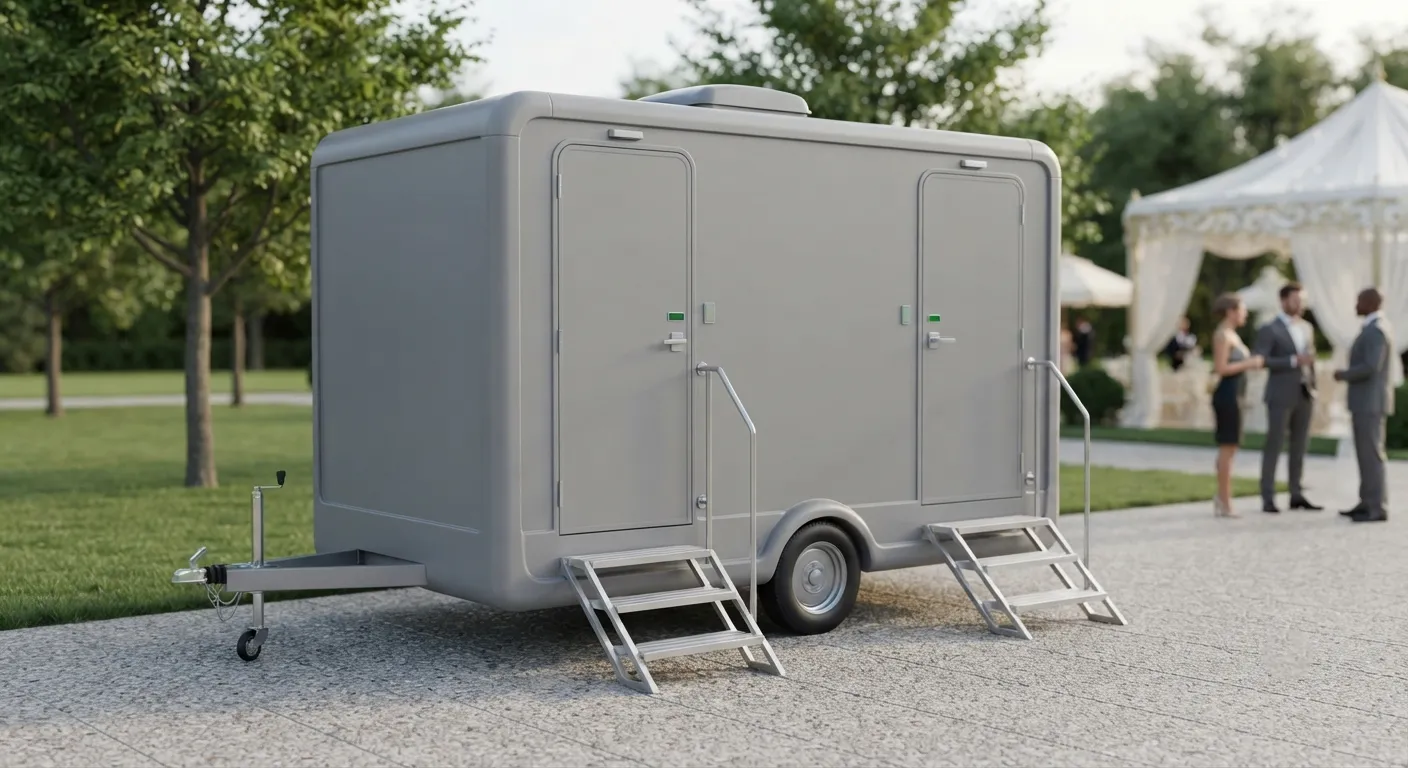
| Unit | Water source | Typical use |
|---|---|---|
| Standard | None, chemical only | Construction, construction site services |
| Deluxe flushable | Onboard freshwater tank | Weddings, festival restroom rental |
| ADA accessible | None or onboard, wider footprint | ADA accessible porta potty sites |
| Restroom trailer | Pressurized water line or large tank | luxury restroom trailer events |
How often are porta potties cleaned?
Once a week is standard under the ANSI/PSAI Z4.3 baseline for up to 10 users over a 40 hour week, but busy construction sites in Olathe often need twice-weekly service. See how often are porta potties cleaned for how headcount changes that schedule.
Do porta potties smell?
A well-serviced unit smells like the deodorizing chemical, not waste, mostly because of the vent stack pulling odor through a filter. Skipped service visits or high heat make smell worse fast. Full breakdown is on do porta potties smell.
How do camping porta potties work?
Same holding tank and chemical system as a construction unit, just smaller and sometimes towable. They work fine off-grid since nothing needs a water or sewer hookup. Details are on camping porta potty.
What happens when a construction worker needs a porta potty on a big site?
OSHA 1926.51(c) sets the ratio: one toilet for 20 workers or fewer, scaling up from there. A crew running framing 9.4 miles southwest in Gardner or right in Olathe follows the same math. See OSHA portable toilet requirements for the full table.
Is a portable toilet ADA accessible?
Only specific units are. ADA Standards 213.2 requires at least 5 percent of clustered single-user units be accessible, with a 60 inch turning circle inside per section 304.3.1. Check ADA restroom requirements before booking a job with public access.
Next step
Get a delivery date
Tell us the address, the dates and the headcount. We size the order and confirm the route.